



This Fall, I had the incredible opportunity to lecture at a three-part Innovation Masterclass workshop with Ontario Lottery and Gaming Corporation (OLG), introducing a group of Legal, Compliance, Governance and AML professionals to design thinking. As someone who practices legal design and applies these principles in compliance and the law, my goal was to show OLG team how design thinking can drive innovative solutions, especially when it comes to tackling real-world business problems.
We focused our sessions on exploring one of OLG’s strategic customer priorities. Over the course of three days, we took a deep dive into the design thinking methodology, a process I apply frequently use in my work to help clients create clear, user-focused legal and compliance solutions.
Day 1: Introducing Design Thinking
On the first day, following a fireside chat where Duncan Hannay, the President & CEO, and Tony Wong, Senior Vice-President of the Governance, Legal & Compliance group, provided their leadership, guidance and support for innovative thinking at the OLG, I provided an overview of design thinking, walking the participants through the fundamental steps: empathy, defining the problem, ideation, prototyping, and testing. We discussed how this methodology helps break down complex problems into manageable steps and allows for the creation of user-centered solutions. For this workshop, we focused on the basics: what is design thinking and how can we practically use it in our daily roles as legal, ethics and compliance professionals?

Day 2: Empathy and Defining the Problem
Empathy is at the heart of design thinking—and on day two, we explored this in depth. A panel of entrepreneurs and innovators spoke about innovating and included Charles Finlay, Founder and Executive Director of the Rogers Cybersecure Catalyst Center, who discussed the importance of rethinking traditional institutions.
Together, we worked on empathy mapping to understand a customer’s needs, desires, and challenges. I emphasized that it’s not just about knowing your user—it’s about immersing yourself in their experience and understanding them. Often times, it is difficult in fields like law and compliance to take a step back from advisory work to focus on listening. We also tackled problem definition strategies, ensuring we were addressing the right issues before moving into ideation. This approach is something I routinely use in my legal design practice to ensure my clients’ policies and systems are truly user-friendly.
Day 3: Brainstorming and Prototyping with Spaghetti and Marshmallows
The third day was dedicated to brainstorming and prototyping—two critical steps in design thinking. The group was able to hear from Chris Greenfield, Managing Director of OneEleven, an innovation center for seeds and start-ups.
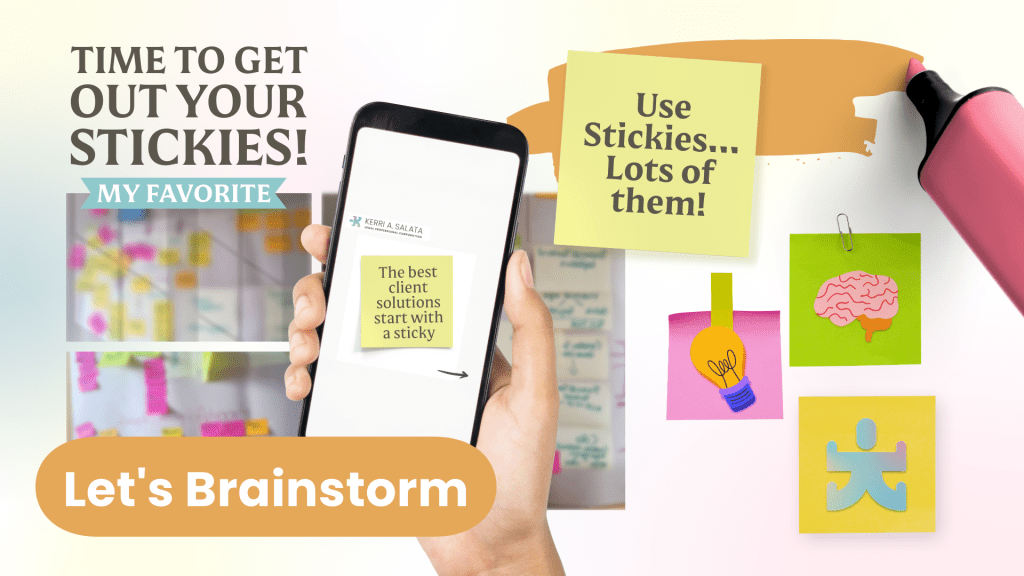
One this day, we brainstormed and to keep things dynamic and fun.
To illustrate the importance of prototyping, I introduced the spaghetti and marshmallow prototyping challenge. The team had 18 minutes to build the tallest tower possible using only spaghetti, tape, and marshmallows. This exercise emphasized the importance of iteration, collaboration, and quick feedback—all key components of prototyping.
This activity underscored an important lesson for OLG and any business: It’s okay to fail fast and iterate. The best solutions often emerge after several rounds of testing and refinement, whether you’re designing a policy, a product, or a marketing strategy.
Key Takeaways: Applying Design Thinking in Law and Compliance
Over the next few months, the Learners will be working in teams following the design thinking methodology to develop potential solutions to OLG business problems. They’ll work hard and stretch their traditional advisory and investigative ways of thinking.
Through this experience, members of the Governance, Legal & Compliance group gained valuable insights into how design thinking can be applied not only to a specific problem but also improve internal processes and communication. As a legal design practitioner, I firmly believe that design thinking offers a fresh approach to addressing legal and compliance challenges. It encourages collaboration, creativity, and a deep understanding of the user—whether that’s your customer or your client.
A massive thank-you to Michael Petrocco, Vice President, Compliance & Investigations and David Collens, Director Ethics & Compliance Program Office, Compliance & Investigations, who were the engineers of the OLG’s Innovation Masterclass, the keen participants from the Governance, Legal & Compliance Group, and the OLG, an organization so dedicated to an innovative mindset, that they had the strategic vision to develop a program that equipped their legal, ethics, compliance and AML professionals with design thinking strategies and tools.
If your organization is looking to rethink how it approaches challenges, from compliance to customer experience, design thinking can be the key.
Visit kerriasalata.com to learn more about how to incorporate these principles into law and compliance.
#OLG